 Image 1 of 4
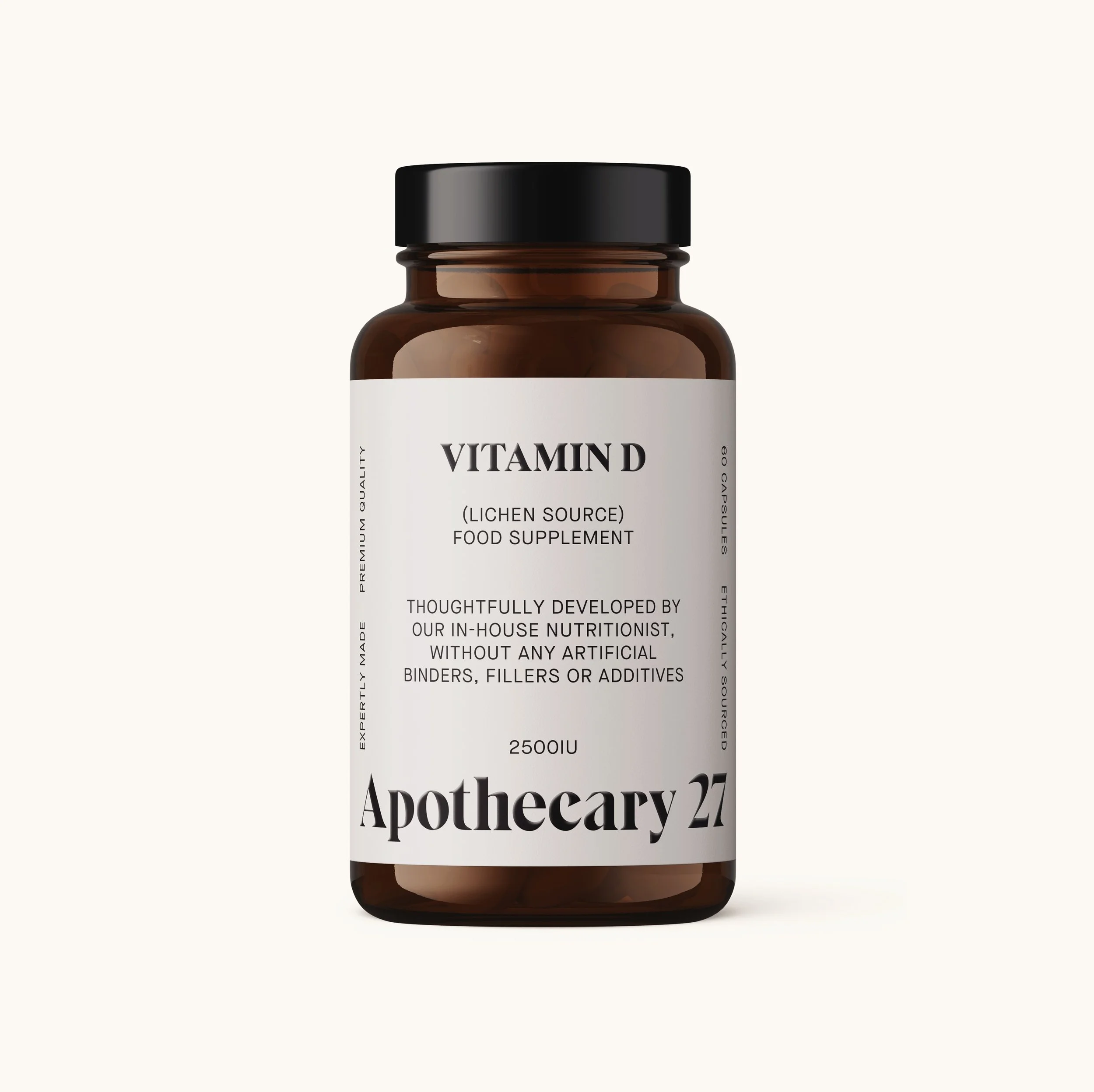 Image 2 of 4
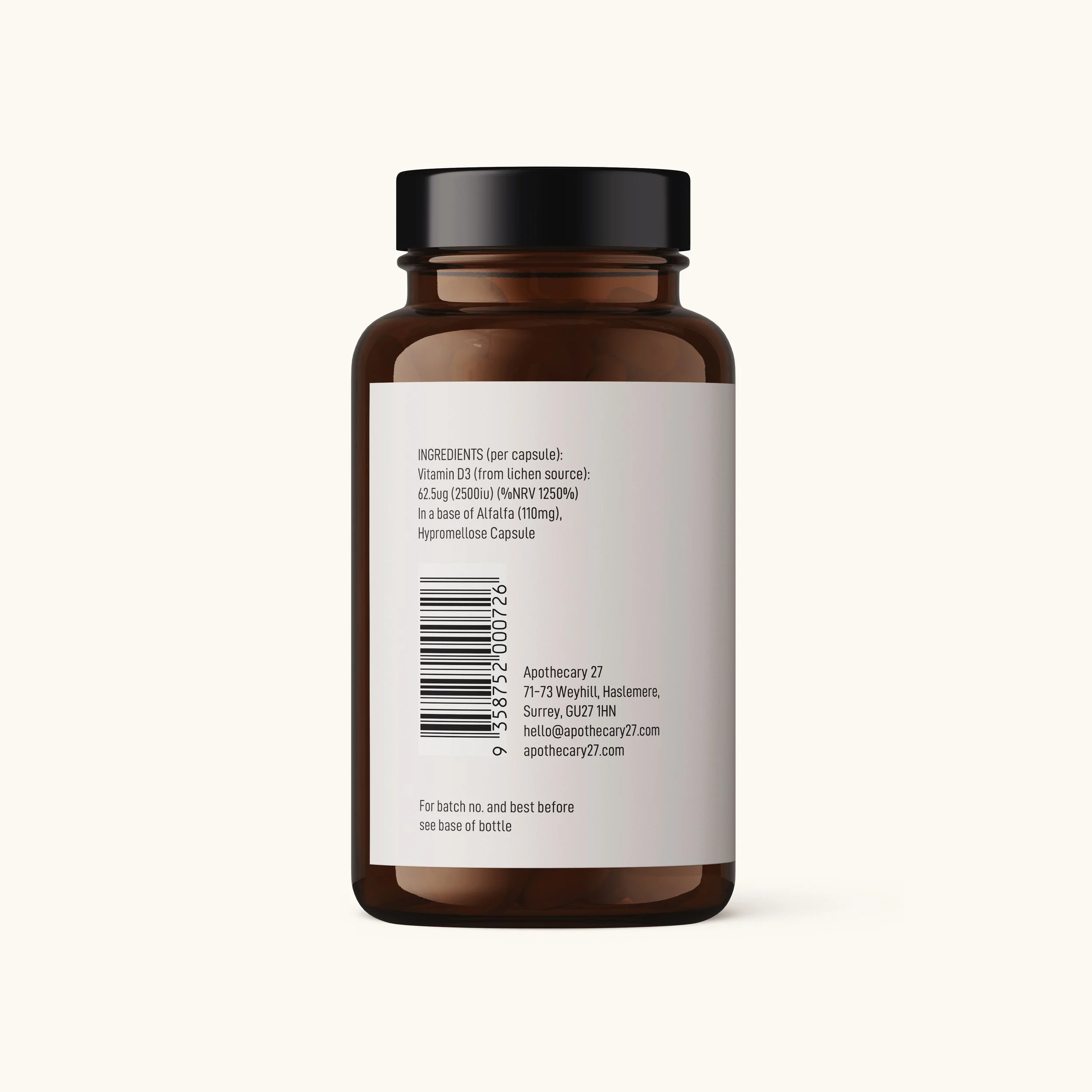 Image 3 of 4
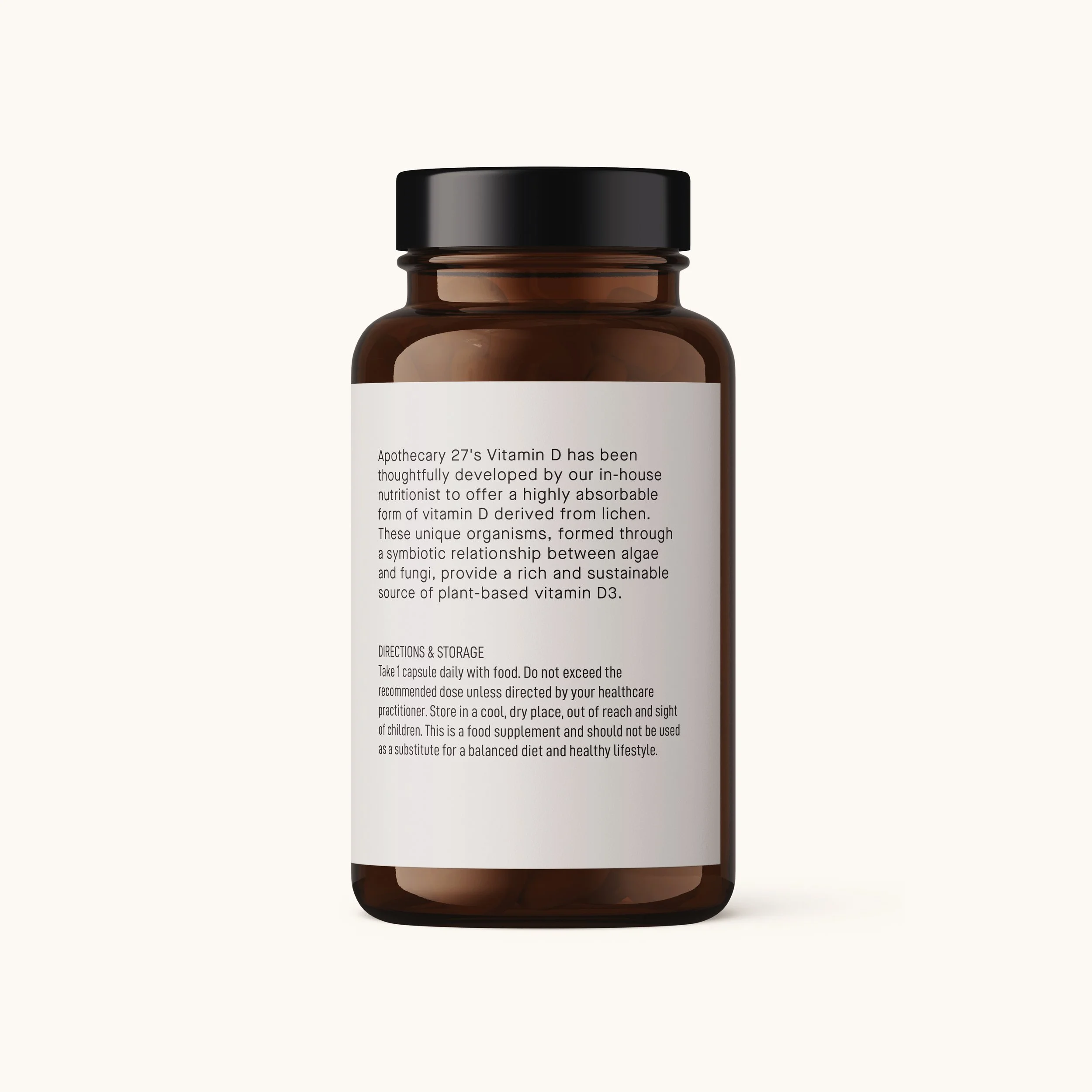 Image 4 of 4
Vitamin D is one of the most recommended nutrients there is — and one of the most underdosed. Most of us in the UK run low through autumn and winter, when there's simply not enough sun on our skin to make our own. Vitamin D contributes to normal immune function, the maintenance of normal bones, teeth and muscle function, and normal absorption of calcium — which is why it matters most exactly when daylight is shortest.
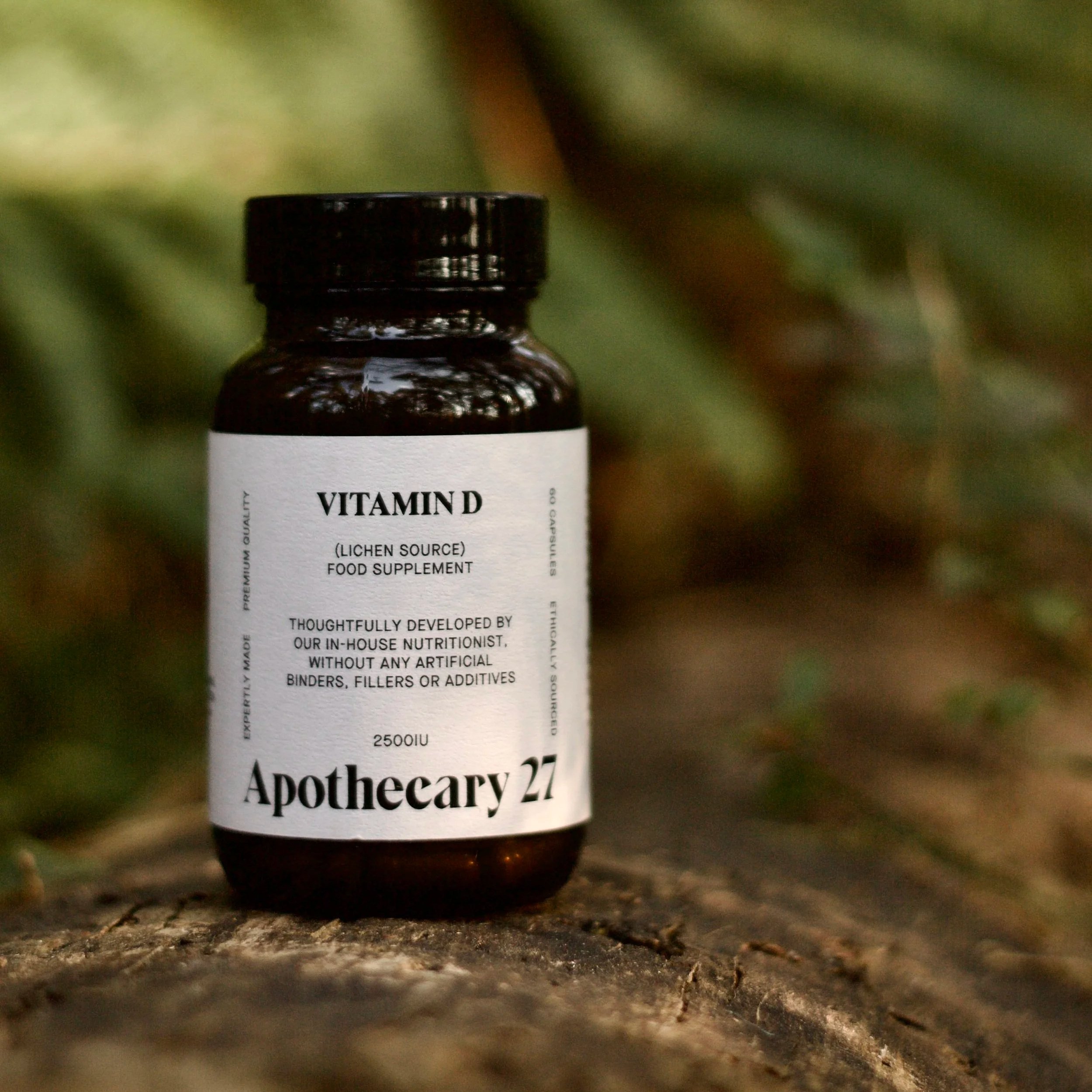
A dose that does something. General guidance sits around 400IU a day, and most supplements stop there. For anyone who spends the darker half of the year mostly indoors, that's often not enough to make a real difference. Ours delivers 2500IU per capsule — a meaningful, research-grounded dose suitable for daily use by most healthy adults.
From lichen, not lanolin. Most D3 is extracted from lanolin — sheep's wool wax — which rules it out for vegans and gives others pause. Ours comes from lichen, one of the very few natural non-animal sources of D3, in a form that's highly absorbable and performs comparably to lanolin D3. Not a vegan compromise — a better-sourced D3 that happens to suit everyone.
In a simple base of alfalfa and a plant-based capsule, with nothing unnecessary added. Made the way everything here is made: meaningful doses, high absorption, always rooted in nature.
Take one capsule daily, with food. Do not exceed the recommended dose unless directed by your healthcare practitioner.
Per capsule: Vitamin D3 (from lichen source) — 62.5µg (2500IU) — 1250% NRV
Ingredients: Vitamin D3 (from lichen source), in a base of Alfalfa (110mg), Hydroxypropyl Methylcellulose Capsule (40mg).
60 capsules. Suitable for vegans. No artificial binders, fillers or additives.
Is 2500IU a lot?
It's a considered dose. UK guidance suggests 400IU as a minimum through autumn and winter — enough to avoid deficiency, not necessarily enough to be comfortably sufficient. 2500IU sits well within the level regarded as safe for daily use by healthy adults, and it's where most people who take vitamin D seriously tend to land.
Why does the label say 1250% NRV when you're against big percentages?
The reference value for vitamin D was set decades ago and is very low, so any meaningful dose produces a large-looking number. Our objection is to doses far beyond what the body can hold onto — vitamin D isn't one of those. The percentage looks dramatic; the dose is sensible.
Why lichen rather than the usual D3?
Most vitamin D3 is made from lanolin, the wax in sheep's wool. Perfectly effective, but not vegan. Lichen — those unassuming organisms formed from a partnership between algae and fungi — is one of the few natural non-animal sources of true D3. The alternative, D2, isn't used by the body as well.
When should I take it?
One capsule daily with food. It's fat-soluble, so it's better absorbed alongside a meal containing some fat than on an empty stomach.
Do I need it all year?
Between roughly October and March, UK sunlight isn't strong enough for most of us to make what we need, however much time we spend outdoors — which is why the government suggests considering a supplement through those months. Plenty of people take it year-round, particularly if they're mostly indoors.
Is it suitable for vegans?
Yes. Lichen-sourced D3 in a plant-based capsule, with no binders, fillers or artificial anything.
Food supplements should not be used as a substitute for a varied, balanced diet and a healthy lifestyle. Store in a cool, dry place, out of the reach of young children.
Vitamin D is one of the most recommended nutrients there is — and one of the most underdosed. Most of us in the UK run low through autumn and winter, when there's simply not enough sun on our skin to make our own. Vitamin D contributes to normal immune function, the maintenance of normal bones, teeth and muscle function, and normal absorption of calcium — which is why it matters most exactly when daylight is shortest.
A dose that does something. General guidance sits around 400IU a day, and most supplements stop there. For anyone who spends the darker half of the year mostly indoors, that's often not enough to make a real difference. Ours delivers 2500IU per capsule — a meaningful, research-grounded dose suitable for daily use by most healthy adults.
From lichen, not lanolin. Most D3 is extracted from lanolin — sheep's wool wax — which rules it out for vegans and gives others pause. Ours comes from lichen, one of the very few natural non-animal sources of D3, in a form that's highly absorbable and performs comparably to lanolin D3. Not a vegan compromise — a better-sourced D3 that happens to suit everyone.
In a simple base of alfalfa and a plant-based capsule, with nothing unnecessary added. Made the way everything here is made: meaningful doses, high absorption, always rooted in nature.
Take one capsule daily, with food. Do not exceed the recommended dose unless directed by your healthcare practitioner.
Per capsule: Vitamin D3 (from lichen source) — 62.5µg (2500IU) — 1250% NRV
Ingredients: Vitamin D3 (from lichen source), in a base of Alfalfa (110mg), Hydroxypropyl Methylcellulose Capsule (40mg).
60 capsules. Suitable for vegans. No artificial binders, fillers or additives.
Is 2500IU a lot?
It's a considered dose. UK guidance suggests 400IU as a minimum through autumn and winter — enough to avoid deficiency, not necessarily enough to be comfortably sufficient. 2500IU sits well within the level regarded as safe for daily use by healthy adults, and it's where most people who take vitamin D seriously tend to land.
Why does the label say 1250% NRV when you're against big percentages?
The reference value for vitamin D was set decades ago and is very low, so any meaningful dose produces a large-looking number. Our objection is to doses far beyond what the body can hold onto — vitamin D isn't one of those. The percentage looks dramatic; the dose is sensible.
Why lichen rather than the usual D3?
Most vitamin D3 is made from lanolin, the wax in sheep's wool. Perfectly effective, but not vegan. Lichen — those unassuming organisms formed from a partnership between algae and fungi — is one of the few natural non-animal sources of true D3. The alternative, D2, isn't used by the body as well.
When should I take it?
One capsule daily with food. It's fat-soluble, so it's better absorbed alongside a meal containing some fat than on an empty stomach.
Do I need it all year?
Between roughly October and March, UK sunlight isn't strong enough for most of us to make what we need, however much time we spend outdoors — which is why the government suggests considering a supplement through those months. Plenty of people take it year-round, particularly if they're mostly indoors.
Is it suitable for vegans?
Yes. Lichen-sourced D3 in a plant-based capsule, with no binders, fillers or artificial anything.
Food supplements should not be used as a substitute for a varied, balanced diet and a healthy lifestyle. Store in a cool, dry place, out of the reach of young children.
Apothecary 27 · Ask the Apothecary
A few questions about what you're focused on and how you like to live. In a couple of minutes we'll share where we'd start — the same considered advice you'd get across our counter.
A general guide to our range, not medical or individual health advice. If you're pregnant, breastfeeding, taking medication or under care for a condition, speak to your GP or pharmacist before starting a supplement.
Your Recommendation
These suggestions come from your own answers and are a starting point, not a prescription or a promise of results. Food supplements support a balanced diet and lifestyle rather than replacing one. For anything you're unsure about, book a consultation, ask us in store, or check with your GP or pharmacist.